Japanese Landscaping
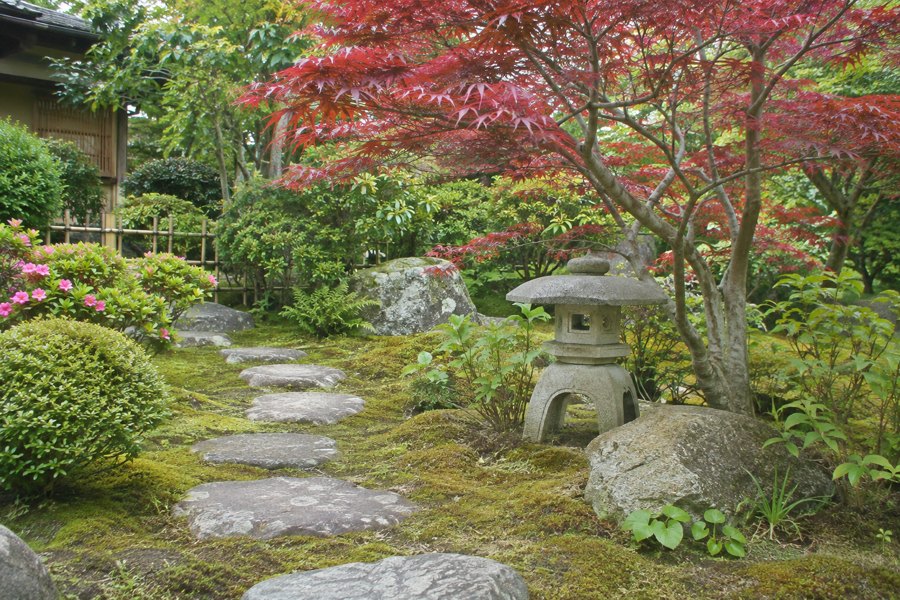
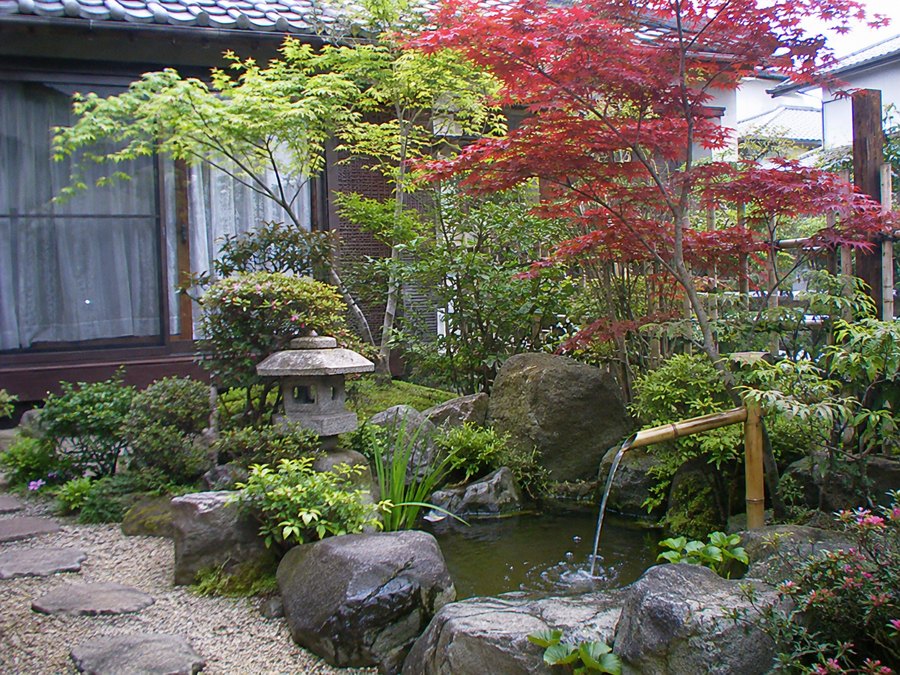
There is a mystique about Japanese landscaping that makes it so fascinating to gardeners throughout the world who try to emulate the work of those wonderful far-eastern gardeners.
But when the East meets West, instead of fusion we sometimes get confusion. Once that moment passes, a new awareness creeps in and the joys of a new culture spread before us.
So it is with Japanese gardens. The ideal Japanese garden is a statement of simplicity and form, often requiring a complete change of mindset to establish, but later finding it simpler to maintain and appreciate.
Japanese landscaping includes many materials we commonly don't use, because of the attention to detail, simplicity, and form.
Rocks Are Garden Ornaments?
While a Western garden may appreciate a big boulder as a central point, the Japanese garden relies on a more subtle approach. Often, Japanese gardens use flat stones or variously shaped boulders with lichens and patinas to build a beautiful garden structure.
In addition, sand in a Japanese garden can be raked into curved patterns to represent the ocean. Sand may not be what we think of as a garden surface material, but in Japan it is used for just that. You may find yourself at a rock quarry more than a home and garden store to find suitable Japanese gardening supplies.
Japanese Landscaping and Water
Japan is an island nation with many beautiful water gardens. In Japanese gardens, minerals, water, sand, and plants are often focal points. A small pond or trickling waterfall can create a meditative element. If you can't build a pond, bamboo containers filled with water plants and a pump can help bring water into a Japanese-themed garden.
Using Sculptures in Japanese Landscaping
One way Japanese gardeners show their love of form is by sculpturing terrain into artificial hills. Placing mounds of earth here and there can bring a natural look to a backyard garden.
Japanese gardening supplies may include tiny pagodas, lanterns, and screens. The archive suggests that these should not detract from the overall serenity or naturalness of the garden, to maintain its Zen-like state of peace.
In Japan, gardens are meant to merge the spiritual with the physical. This can still be done by choosing Japanese gardening supplies that bring these aspects into the garden.
Trees and Plants for a Japanese Garden
Most Japanese trees and plants for the garden are quite understated by Western standards. Japanese maple is a favorite because of its showy bronze and red leaves. Bonsai can seem tiny and plain by Western standards, but are at home in a Japanese garden.
Don't limit your choices to bushes and trees. Add mosses and creepers to your Japanese landscaping to add naturalness to stone steps or stone sculpture.
Filed under: Garden Design